Popular Posts

Monday, March 28, 2011

WHAT IS A NEUROMA?

A neuroma is a painful growth of nerve tissue in the foot - most often between the third and fourth toe bones. It forms when bones in the feet press together and irritate a nerve. This may be caused by wearing tight or poorly fitting shoes, or by repeated stress on the foot. Neuromas often form in women who wear high heels frequently. Injury or a foot deformity can also cause a neuroma.

Here are some symptoms of a neuroma:
  • A sharp, burning pain in the ball of the foot, especially when walking.
  • Tingling or numbness between the toes and the ball of the foot.
  • A feeling that you have a stone in your shoe, or that your sock is wrinkled.
  • A painful lump that reproduces your symptoms when touched.
As a neuroma gets worse, it can cause a lot of pain and keep you from activities you enjoy. Fortunately, there are several ways to reduce symptoms, such as:
  • Shoe changes and orthotics
  • Padding and taping
  • Physical Therapy
  • Medication
Your doctor will talk with you about possible treatments. In most cases, painful symptoms can be reduced without surgery. For severe problems, your doctor may recommend treating the nerve directly. Left untreated, neuromas often get worse.

Wednesday, March 23, 2011

WHAT IS TENDONITIS?

When you use a set of muscles too much, you're likely to strain the tendons (soft tissues) that connect those muscles to your bones. At first, pain or swelling may come and go quickly. But if you do too much too soon, your muscles may overtire again. The strain causes the tendon's outer covering to swell or small fibers in a tendon to pull apart. If you keep pushing your muscles, damage to the tendons adds up and tendonitis develops.

X-rays may be taken to rule out a broken bone. To identify damage to a tendon, your doctor may order an MRI.

To treat tendonitis, you can try:

  • Ice and heat
    • Ice helps to prevent swelling while heat helps to reduce it
  • Medications
    • Aspirin or other anit-inflammatory medications may help to reduce pain and swelling
  • Limiting Activities
    • Rest allows the tissues in your foot to heal

Monday, March 21, 2011

HAMMERTOES

What Is A Hammertoe?

A hammertoe is a contracture-or bending-of the toe at the first joint of the digit, called the proximal interphalangeal joint. This bending causes the toes to appear like an upside-down V when looked at from the side.

How Do You Get A Hammertoe?

A hammertoe is formed due to an abnormal balance of the muscles in the toes. This abnormal balance causes increased pressures on the tendons and joints of the toe, leading to a contracture. Heredity and trauma can also lead to the formation of a hammertoe.

What Can You Do For Relief?

  • Apply a non-medicated hammertoe pad around the bony prominence of the hammertoe
  • Wear a shoe with a deep toe box
  • If it becomes inflamed and painful, apply ice packs several times a day to reduce swelling
  • Avoid heels more than two inches tall
  • Avoid wearing shoes that are too tight or too narrow
Remember that foot pain is not normal. Healthy, pain-free feet are a key to your independence and need regular attention.

Friday, March 18, 2011

IN NO TIME AT ALL!


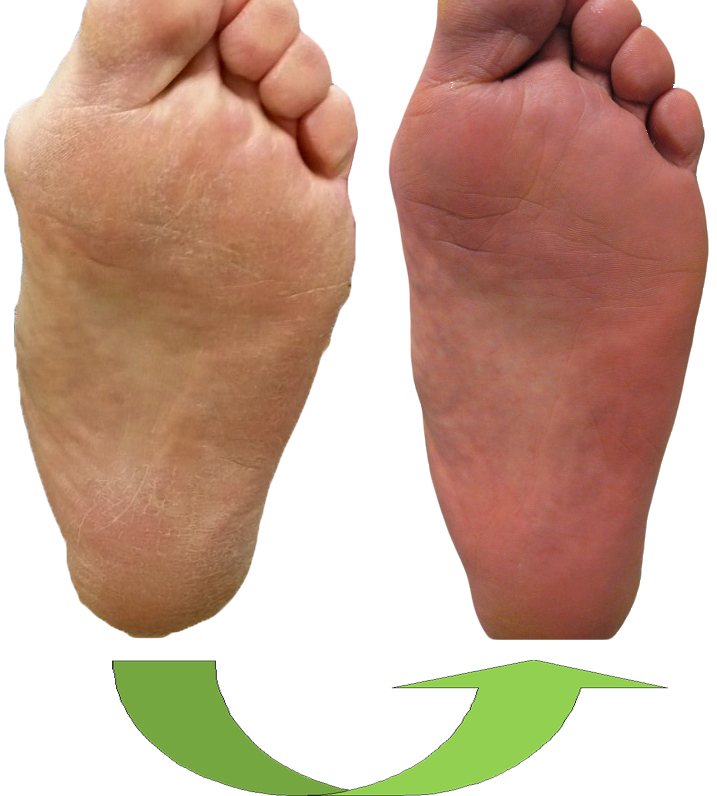
With proper care of your feet, you can turn your feet from this....to this, in no time at all!

Wednesday, March 16, 2011

HIGH HEELS

Did you know that high heels may contribute to knee and back problems? If women persist in wearing high heels, there are ways to relieve some of the abusive effects:

  • They can limit the time they wear them
  • Alternating high heels with good-quality oxford-type shoes or flats for part of the day
  • Buy shoes in the afternoon to prevent tight shoes, since feet tend to increase in size later in day
  • See your podiatrist for a custom made pair of orthotics for your high heels
Although heels may look nice, they can be detrimental to your foot health if you ignore the above tips!

Monday, March 14, 2011

ON-THE-JOB FOOT HEALTH

Your ability to use your feet safely, with ease and comfort, is vital if you are to remain a valuable and productive worker. When your job requires you to walk significant distances, stand on your feet for long periods, work in potentially hazardous areas or with potentially hazardous materials, you have some risk of foot injury. However, you can do a lot to prevent injuries by keeping your feet healthy and following these safe work practices:

  • Be aware of the hazards of your job and the proper protective measures to take.
  • Don't take chances or unnecessary risks. Take time to do your job right.
  • Be alert. Watch for hidden hazards.
  • Be considerate. Watch out for other worker's safety.
  • Follow the rules. Don't cut corners. Use your equipment as specified.
  • Concentrate on the job. Inattention can lead to accidents.
  • Pace yourself. Work steadily at a comfortable speed.
  • Keep your work area clean and your tools in their place.
Keeping these tips in mind, enjoy your Monday!

Friday, March 11, 2011

DRY FEET - BATHING

Did you know that excessive bathing will sometimes dry out the skin of the feet? When bathing, we are removing a layer of the body's natural oils that it may need to retain the moisture of the skin. Although bathing is necessary for cleanliness and reduction of harmful bacteria, it can also be taken to the extreme and create a harmful effect.

Wednesday, March 9, 2011

TIPS FOR PREVENTION OF FUNGAL NAILS

  • Proper hygiene and regular inspection of the feet and toes are the first lines of defense against fungal nails
  • Clean and dry feet resist disease
  • Washing the feet with soap and water, remembering to dry thoroughly, is the best way to prevent an infection
  • Shower shoes should be worn when possible in public areas
  • Shoes, socks, or hosiery should be changed more than once daily
  • Toenails should be clipped straight across so that the nail does not extend beyond the tip of the toe
  • Wear shoes that fit well and are made of materials that breathe
  • Avoid wearing excessively tight hosiery, which promote moisture
  • Socks made of synthetic fiber tend to "wick" away moisture faster than cotton or wool socks
  • Disinfect instruments used to cut nails
  • Disinfect home pedicure tools
  • Don't apply polish to nails suspected of infection - those that are red, discolored, or swollen, for example
  • AND, See Your Podiatrist!

Monday, March 7, 2011

INGROWN TOENAILS


Ingrown nails, the most common nail impairment, are nails whose corners or sides dig painfully into the soft tissue of nail grooves, often leading to irritation, redness, and swelling. Usually, toenails grow straight out. Sometimes, however, one or both corners or sides curve and grow into the flesh. The big toe is usually the victim of this condition, but other toes can also become affected.

Ingrown toenails may be caused by:
  • Improperly trimmed nails (Trim them straight across, not longer than the tip of the toes. Do not round of corners. Use toenail clippers.)
  • Heredity
  • Shoe pressure; crowding of toes
  • Repeated trauma to the feet from normal activities
If you suspect an infection due to an ingrown toenail, see your podiatrist. "Do-it-yourself" treatments, including any attempt to remove any part of an infected nail or the use of over-the-counter medications, should be avoided. Nail problems should be evaluated and treated by your podiatrist, who can diagnose the ailment, and then prescribe medication or another appropriate treatment.

A podiatrist will resect the ingrown portion of the nail and may prescribe a topical or oral medication to treat the infection. If ingrown nails are a chronic problem, your podiatrist can perform a procedure to permanently prevent ingrown nails. The corner of the nail that ingrows, along with the matrix or root of the piece of nail, are removed by use of a chemical, a laser, or by other methods.

Thanks to the APMA for the information. 

Friday, March 4, 2011

SELF ASSESSMENT OF YOUR FEET - WHEN TO SEE A PODIATRIST

Every local drugstore has aisles of “do-it-yourself” medical fixes.  For your feet they have blister and corn pads, insoles, fungus sprays, and nail clippers.  So when you have foot and ankle problems, how do you know
when to deal with them at home using over-the-counter (OTC) products and when to see the podiatrist?
  • If you suspect that you have an ingrown nail, it is best not to use OTC products.  See your podiatrist as soon as possible to avoid the possibility of infection.  The doctor can safely remove the ingrown nail and may be able to alleviate the problem entirely for the future. 
  • OTC wart removal medication is relatively mild but can cause ulcerations if left on too long.  You can try to alleviate warts on the feet with these products, but the podiatrist has more effective medications and can also do simple procedures to rid you of warts.  Wart removers should never be used if you have neuropathy except under the supervision of a podiatric physician.
  • Despite numerous blogs and articles about treating onychomycosis (fungal nails) and warts with Vick's VapoRub, duct tape, bleach, white vinegar, and other household items, there are no scientific data or evidenced-based research studies to support these treatment options.
  • Sprains and strains can be treated at home initially with the “RICE treatment” - rest, ice, compression, and elevation.  If swelling is persistent, a visit to the podiatrist’s office is in order to determine if there are any broken bones.  
Occasionally, home remedies can cause a new problem or make existing problems worse, so use them all in moderation.  Anyone with diabetes or a peripheral vascular disease (PVD) who has foot and ankle problems
should always opt to visit the podiatrist for even minor concerns.  People who do not have diabetes or PVD should also be wary of pain, color changes, drainage, swelling, heat, or open areas in or on any part of the  foot or ankle. These signs warrant a professional’s experience in dealing your the problem.

Wednesday, March 2, 2011

YOUR BABY'S FEET


You worry about you children's teeth, eyes, and other parts of the body. You teach washing, brushing, and grooming, but what do you do about your child's feet - those still-developing feet that have to carry the entire weight of the body through a lifetime?

Many foot ailments have their origins in childhood, and heredity is a major factor in the development of these problems. Periodic professional attention and regular foot care can minimize these problems in later life.

Neglecting foot health invites problems in other parts of the body, such as the legs and back. There can also be undesirable personality effects. The youngster with troublesome feet walks awkwardly and usually has poor general posture.

Here are some suggestions to help you assure that your child's development proceeds normally:

  • Look carefully at your baby's feet. If you notice something that does not look normal to you, seek professional care immediately. Deformities will not be outgrown by themselves.
  • Cover your baby's feet loosely. Tight covers restrict movement and can impede normal development. Also, it is not a good idea to put hard shoes on children too early for the same reason. 
  • Provide an opportunity for exercising the feet. Lying uncovered enables the baby to kick and perform other related motions that prepare the feet for weight-bearing.
  • Change the baby's position several times a day. Lying too long in one spot, especially on the stomach, can put excessive strain on the feet and legs.
Whenever you have questions about your child's foot health, contact a podiatrist in you community.

Thanks to the APMA for this information.

Monday, February 28, 2011

YOUR FEET ARE A MIRROR OF YOUR HEALTH

Did you know that your feet mirror your general health? Conditions such as arthritis, diabetes, nerve and circulatory disorders can show their initial symptoms in your feet. Most foot ailments can be your first warning sign of more serious medical problems.

Friday, February 25, 2011

BONE GROWTH

Patient came in with one toe shorter than the rest, which has been as such since birth. After taking an x-ray, it was discovered that there was a 12mm gap in length.

Once we determined what was going on, a external fixator was put in to stretch the bone out. This causes new soft bone tissue to form in the gap.

During the final phase of correction, the toe was pinned straight. This allowed us to make the final appearance of the foot and toes to be normal. 


Wednesday, February 23, 2011

ARTHRITIS


Did you know that each foot has 33 joints that can be afflicted by arthritis? Arthritis affects over 40 million Americans with symptoms such as swelling of the joints, recurring pain, skin changes, and limitation in motion of a joint. Due to the feet being a frequent target of arthritis, podiatrists are usually the first to hear such complaints!

Friday, February 18, 2011

PATIENTS WITH DRY FEET


Recently, many patients have been coming in with chronic dry feet. Once you find out what is causing your chronic dry feet, it becomes much easier to treat and manage your problem. Podiatrists have several treatments for dry feet because they know that if you take care of your feet, your feet will continue to take care of you!

Wednesday, February 16, 2011

LINK BETWEEN FOOT PAIN AND OBESITY

According to a recent study, 72% of Americans say they do not exercise due to foot pain. Along with the current rates of obesity, this makes addressing foot pain critically important!

Thursday, February 3, 2011

BREAK VS. SPRAIN

Did you know that it is virtually impossible to tell the difference between a break and a sprain without going to your doctor? A sprain is a stretch and/or tear of a ligament, which is the tissue that connects your bones. On the other hand, a break is a fracture, splinter, or complete break of a bone. Both sprains and breaks can easily happen during physical activity, and should be looked at by a doctor to ensure proper healing.

Monday, January 31, 2011

WE HAVE CUSTOM ORTHOTICS TO TREAT YOUR LOWER EXTREMITY PAIN


Our custom-made orthotics help with foot pain, heel pain, ankle pain, knee pain, hip pain, and back pain. They are molded to your foot to treat your problem! Available for men's dress shoes, women's heels, sneakers, ice skates, skis, and athletic cleats.

Wednesday, January 26, 2011

IS IT FUNGUS?


Thick 2nd toenail

Patient presented to the office complaining of a thick toe nail, happened to be the second toe. She though it might be fungus. Actually, it turns out that she has the common "problem" we have been talking. After further evaluation and xray, it turns out she has constant pain in the ball of her foot and a painful bunion. As we suspected, the lab confirmed there was no fungus in the nail. The problem was the that the toe was too long and had constant pressure at the tip, causing a thick, unsightly and painful nail. We fixed the bunion, the toe, and the callus on the bottom of her foot. New nail should grow within the next couple of months...